
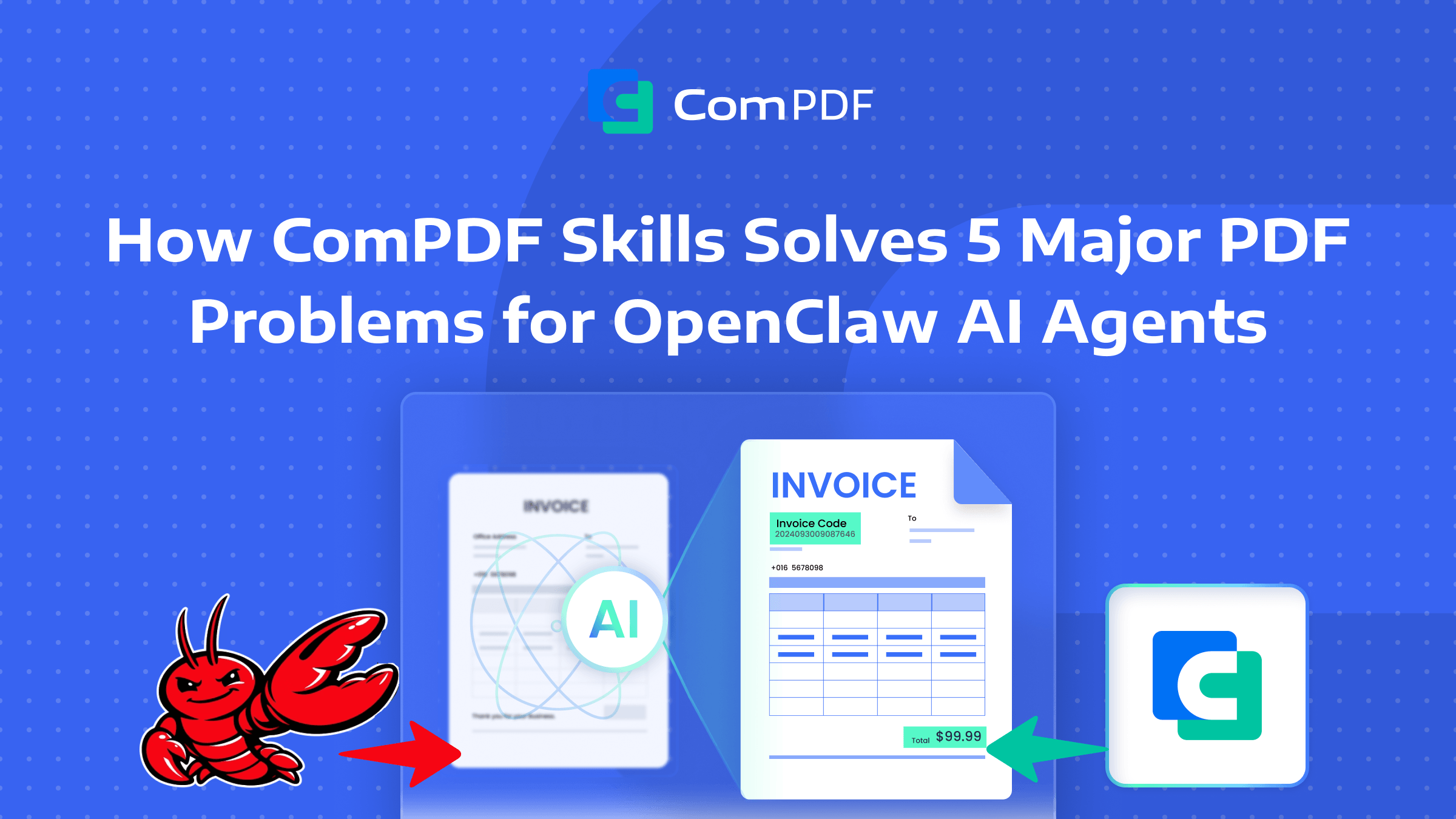
ComPDF Skills now support direct calls by OpenClaw users to automate document processing!
As a frontrunner in the field of automated workflows and AI Agents, OpenClaw continues to lead the charge in AI-driven productivity transformation. The integration of ComPDF Skills now fills a critical gap in document processing—from AI-powered OCR document conversion to precise page manipulation. This article details the core PDF challenges that ComPDF Skills can resolve for you.
OpenClaw Problem 1: From "Read-Only" to "Editable" — Breaking Data Out of PDF Silos
When converting PDFs to traditional formats like Word, Excel, or HTML, users often encounter issues like layout distortion, loss of table frameworks, or overlapping images. This unstructured and chaotic data prevents OpenClaw Agents from accurately extracting key information, causing subsequent data analysis or automated processing flows to fail due to unusable material.
-
ComPDF Skills Solution: High-Fidelity Conversion & Multi-Format Support
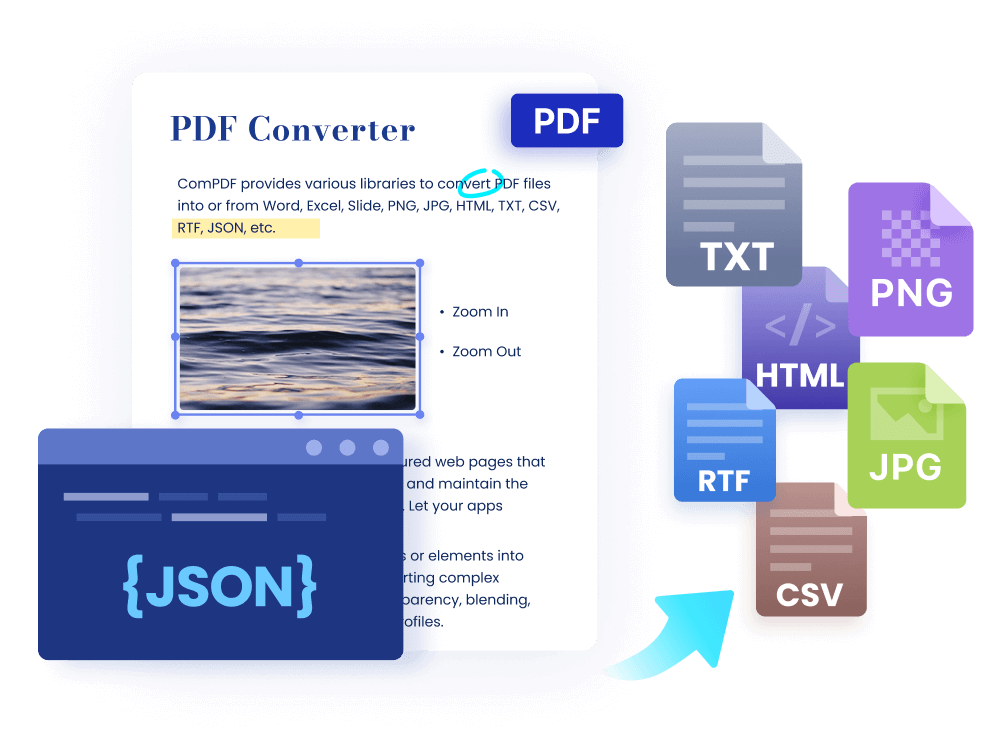
By supporting high-fidelity conversion of PDFs or images into various formats including Word, Excel, PPT, HTML, CSV, JSON, Markdown, and TXT, ComPDF achieves a high degree of original document layout restoration and precise table structure recognition. This powerful multi-format output capability ensures that Agents receive clean, standardized, productive material, fundamentally guaranteeing the smooth execution of automated tasks.
OpenClaw Problem 2: Taming Hallucinations in Complex PDFs
When automating the processing of semi-structured data, data errors frequently occur.
-
ComPDF Skills Solution: High-Fidelity Conversion & Markdown Support
Through high-fidelity conversion (PDF to Markdown/JSON), ComPDF transforms PDFs into structured data that is easiest for AI to understand. This helps Agents accurately recognize table data and heading hierarchies, enhancing the accuracy of RAG (Retrieval-Augmented Generation) and other automated document workflows.
OpenClaw Problem 3: Bringing Scans and Handwriting Data Out
Traditional AI Agents cannot directly process physical paper scans, contract photos, or documents with handwritten signatures.
-
ComPDF Skills Solution: Conversion with OCR
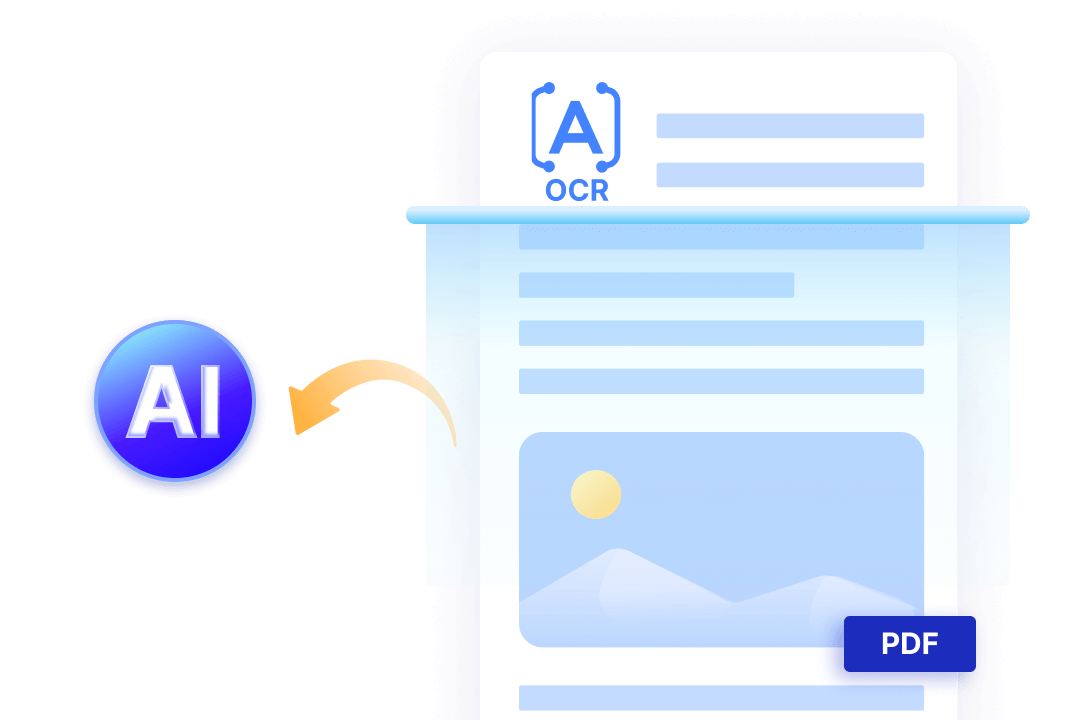
Utilizing a professional-grade OCR engine, ComPDF converts image-based information into searchable and editable text. This unlocks the Agent's ability to automate the processing of expense reports, historical archives, and handwritten contracts.
OpenClaw Problem 4: Taming Token Bloat and High LLM Costs
Overly large PDF files or documents containing irrelevant pages can lead to a surge in token consumption when processed by an Agent, potentially even exceeding context limits.
-
ComPDF Skills Solution: Advanced Page Manipulation & Optimization
Precise Control: Use page extraction and splitting features to ensure the Agent only processes the relevant pages.
Smart Compression: Optimize document size before uploading to reduce transmission time and token costs.
This significantly lowers operational costs and improves the Agent's response speed.

OpenClaw Problem 5: Solving the Version Control & Audit Trail
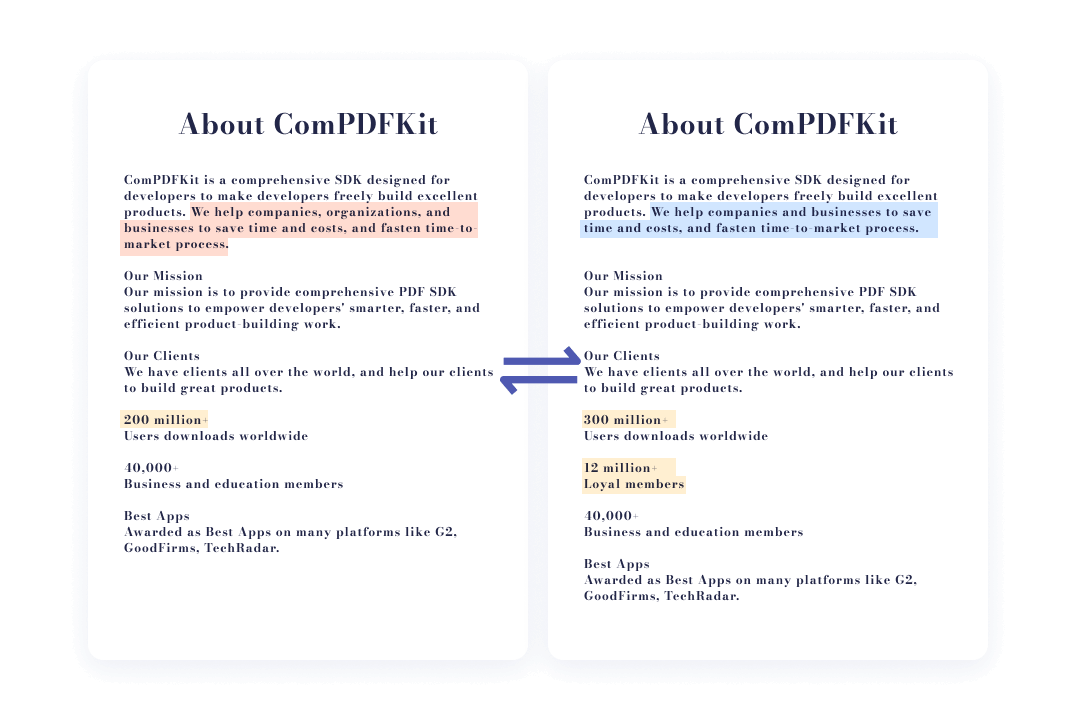
In legal or financial audit workflows, it is challenging for Agents to accurately identify subtle changes between two PDF versions.
-
ComPDF Skills Solution: Document Comparison
Provides the ability to compare blueprints or content-based documents. The Agent can automatically identify changes in contracts and output a difference report, enabling fully automated compliance audits.
Conclusion
The launch of ComPDF Skills is not just about adding a set of tools to OpenClaw; it's about infusing a deep "document perception" capability into the platform. From breaking down data silos to reducing operational costs, ComPDF is helping developers worldwide build more powerful and reliable AI Agents on OpenClaw.